Choosing between textile and leather motorcycle clothing isn’t just about style; it’s about how, when, and where you ride. Both materials have evolved dramatically in recent years, and each brings clear strengths for different types of riders and weather conditions.
Before you decide, it’s worth understanding how the two compare across protection, comfort, versatility, and weather performance, especially in the UK’s unpredictable climate.
Understanding the Basics
Each type of motorbike rider will have their own style of clothing and priorities when it comes to riding, for example, a track-day enthusiast, a daily commuter, and a weekend tourer will each demand something unique from their gear.
- Track riding: Leather is compulsory for most track days due to its unrivalled abrasion resistance.
- Touring and commuting: Textile gear dominates thanks to its weatherproofing and comfort.
- Everyday riding: Many riders mix materials, for instance, a textile jacket with leather trousers to strike the right balance between safety and practicality.
Leather Motorcycle Clothing
The Advantages
Leather has traditionally been the leader when it comes to abrasion protection. Its dense fibres provide a natural barrier against impact and sliding, making it the material of choice for high-speed and sport riders. It’s also a recommended suggestion if you’re considering riding in the winter months.
Modern leathers also feature:
- CE-approved armour in the shoulders, elbows, knees and back.
- Perforation zones for ventilation during summer rides.
- Double or triple stitching for enhanced tear resistance
With proper care, leather can last for decades and mould perfectly to your body for a “second-skin” fit ideal for stability and control at speed.
The Drawbacks
Despite its durability, leather is sometimes not the ideal choice for a lot of riders, as once soaked, it becomes heavy and takes a long time to dry. It also offers limited breathability for stop-start riding or touring. You can apply waterproof treatments or use a rain over-suit, but for consistent wet-weather protection, textile gear is the winner.
Leather also requires regular maintenance, cleaning, conditioning, and correct storage to prevent cracking and stiffness.
Textile Motorcycle Clothing
The Advantages
Textile gear has seen huge innovation, combining synthetic fibres such as Cordura®, Kevlar® and Armacor® with advanced membranes like GORE-TEX, D-Dry, or Drystar.
According to Motorcycle News, textile jackets now deliver comfort and practicality “in most situations and in all weather conditions,” with many achieving AA-rated CE certification.
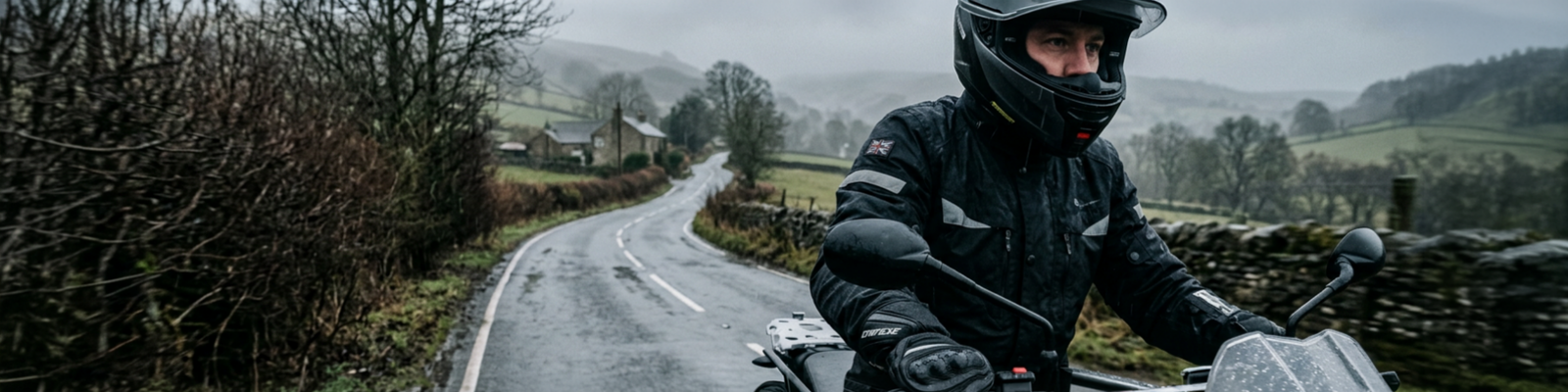
- Weather protection: Fully waterproof and windproof, often with removable thermal liners.
- Comfort and flexibility: Easier to layer and adjust to body shape; lighter than leather.
- Ventilation: Integrated vents and breathable membranes to prevent overheating.
- Maintenance: Machine washable and requires lower upkeep compared to leather.
For most riders facing cold mornings, rain showers and long commutes, textile gear provides the most practical year-round solution.
The Drawbacks
While top-tier textiles now rival leather in terms of safety, cheaper options often compromise on abrasion resistance or waterproofing. Always look for garments rated AA or AAA under EN 17092 and fitted with Level 2 armour at impact points.
Textile vs Leather
| Feature | Leather Gear | Textile Gear |
| Abrasion Resistance | Excellent; preferred for high-speed or track use | Very good with high-denier fabrics, AA–AAA ratings possible |
| Weather Protection | Naturally windproof, rarely waterproof | Waterproof membranes; ideal for UK conditions |
| Comfort & Fit | Snug, moulds to rider, limited layering | Adjustable, looser fit, easily layered |
| Maintenance | Needs regular care, drying, and conditioning | Simple cleaning; re-proof waterproofing occasionally |
| Longevity | Extremely durable when maintained | Very good, but membranes may degrade over time |
| Typical Use | Track and sport riding | Commuting, touring, year-round riding |
Modern Materials and Safety Standards
Recent advances have blurred the line between the two.
- Textiles: Covec® and Armacor® fabrics can outperform traditional leather in abrasion testing while offering superior waterproofing.
- Leathers: Now include stretch panels, comfort linings, and partial perforation zones for airflow.
Both can carry CE approval under PPE Regulation (EU 2016/425), meaning tested protection for abrasion, tear and impact resistance. Always check the internal label for its EN 17092 rating (A, AA or AAA).
Style and Bike Type
Your motorcycle often influences your choice:
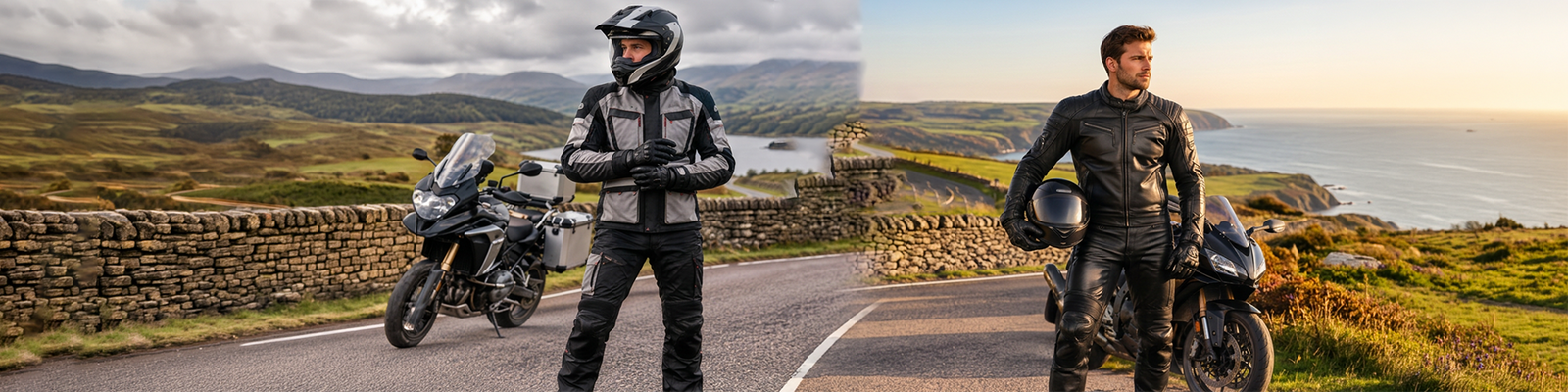
- Sports and retro bikes: Traditionally lean toward leather for its sleek profile and race-inspired heritage.
- Adventure or touring bikes: Better paired with textiles offering multiple pockets, ventilation, and waterproof membranes.
- Urban and commuter riders: Typically favour textile jackets for quick on-off convenience and layered comfort.
Care and Longevity
Leather: Clean gently with a damp cloth, apply conditioner, and air-dry away from heat. Use waterproof sprays sparingly.
Textile: Wash using a technical fabric cleaner; avoid fabric softener. Re-proof when water stops beading on the surface. Remove armour before washing if recommended.
Regular maintenance preserves safety performance and extends the life of your investment.
Making the Right Choice
Typically, the best gear depends on your priorities and how often you ride, as well as the conditions.
- Choose leather if you value maximum protection and a race-fit aesthetic.
- Choose textile if you need practicality, waterproofing, and comfort for mixed conditions.
Both now offer CE-approved safety and a wide range of designs to match your riding style. Many riders find that owning one of each gives the best of both worlds.
Final Thoughts
Modern motorcycle clothing is no longer a choice between style and safety. With today’s advanced materials and testing standards, both leather and textile can keep you protected — it’s simply a matter of choosing what suits your climate, comfort, and riding habits.
To learn more about protective kit essentials, see our safety gear guide, or browse the latest motorcycle clothing at J&S Accessories for CE-approved jackets, trousers and suits built for every season.