Why You Need Winter Motorcycle Gear
Winters in the UK typically mean cold rain, biting wind-chill and short daylight hours. The right motorcycle clothing can keep your core warm, block wind, prevent rain from soaking in, and preserve dexterity for smooth throttle, brake, and clutch control.
Good winter gear isn’t just about comfort; it can also provide overall better protection and help you react faster when conditions change. For a comprehensive breakdown of essential protective equipment, refer to our safety gear guide.
Types of Winter Gear
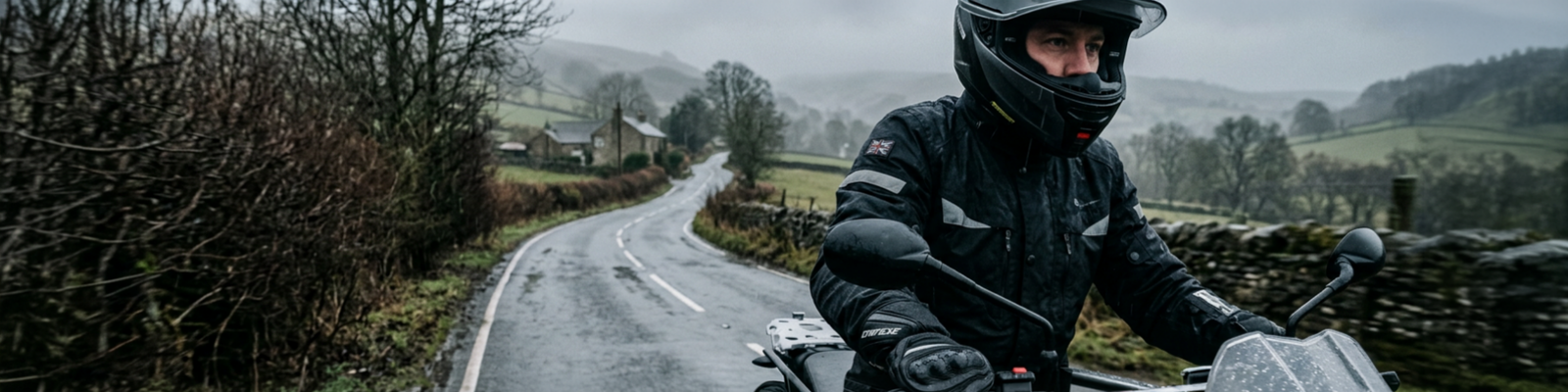
Winter clothing typically works best as a system. Start with protective, CE-approved outerwear, then add warmth and weatherproofing in an intelligent way.
Gloves
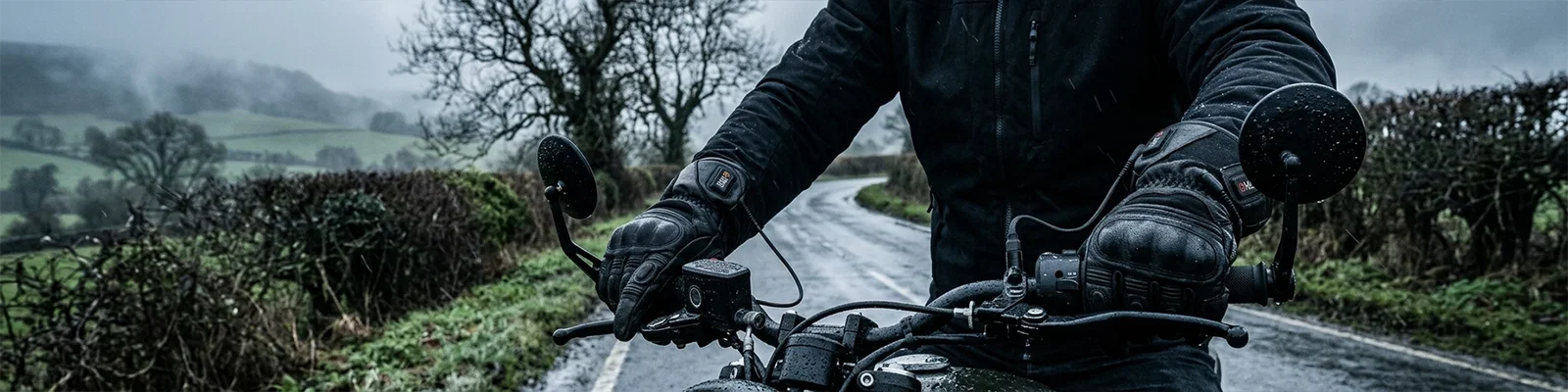
- What to look for: Long gauntlets that overlap the jacket cuff, waterproof membrane, insulation that doesn’t bulk up the palm, visor-wipe, secure wrist/forearm closure.
- Nice to have: Heated options (battery or bike-powered) for all-day warmth; dual-chamber gloves (one chamber for feel, one for warmth).
Jackets
- Core features: CE-approved shell (EN 17092) with shoulder/elbow armour, back protector pocket (ideally Level 2), waterproof membrane, storm flap, high collar, drawcord hem.
- Thermal strategy: Removable liner for adaptability; vents you can crack open on milder days.
- Fit tip: Try in a riding stance with layers—no pulling at the shoulders, no gaps at the lower back.
- Explore the full range of motorcycle clothing to match your riding style and budget.
Trousers
- Keep the seal: Connection zip to the jacket to stop drafts; higher back yoke; over-boot design or snug cuff that tucks cleanly.
- Protection + practicality: Knee armour (and hip if possible), reinforced seat, waterproof membrane and heat-resistant inner calf panels.
Base Layers
- Function first: Moisture-wicking thermals (merino or technical synthetics) to move sweat off the skin and trap warm air.
- Avoid cotton: It holds moisture and can cause you to feel cold.
- Add mid-layers as needed: a lightweight fleece or insulated gilet. Keep bulk away from the arms for a free control feel.
How to Use the Layering System
- Base (dry): Close-fit thermals to regulate moisture and retain warmth.
- Mid (warm): One efficient insulating layer—enough loft to trap heat without restricting movement. Swap this piece with a heated gilet for long winter commutes.
- Shell (shield): The protective, abrasion-resistant, waterproof outer. Seal cuffs, collar and hem; use the connection zip; and adjust vents sparingly to balance breathability.
- Hands & feet: Thin liner gloves/socks can help—but don’t over-stuff. Tight layers reduce circulation and make you feel colder.
What is GORE-TEX Motorcycle Gear?
GORE-TEX is a waterproof, windproof and breathable membrane used in motorcycle garments. Two common constructions:
- Drop-liner: Membrane hangs behind the shell—cost-effective and comfy, but the outer fabric can “wet out” before the membrane stops water getting through.
- Laminated: Membrane is bonded to the outer shell—water beads off, dries faster, and feels less clammy in persistent rain. Often pricier, typically better for daily commuters and tourers.
Whichever you choose, maintain DWR (durable water repellent) and keep garments clean so the membrane can breathe. For purpose-built rain protection, browse our motorbike waterproofs. If you prefer premium performance kits and race-bred ergonomics, explore Alpinestars clothing.
Visibility and Safety in Darker Months
- Be seen: Reflective piping/panels, hi-vis overlays and clean, anti-fog visors are essential when the sun sits low and roads spray up grime.
- Keep vision clear: Use a Pinlock/anti-fog insert, crack the visor a notch at stops, and carry a small Microfibre cloth for quick wipes.
- Warm = precise: Warm hands keep lever feel crisp; consider heated grips or gloves to reduce stiff, delayed inputs.
Maintenance and Re-Proofing
- Clean correctly: Use tech-wash (not standard detergent) to protect the membrane and DWR finish.
- Re-proof regularly: Spray-on or wash-in DWR restores beading so shells don’t saturate and chill you.
- Check wear points: Zips, storm flaps, seam tape and armour positions. Replace compacted thermal liners and worn hook-and-loop before winter truly sets in.
- Boots & gloves: Treat leather, dry slowly (never over direct heat), and refresh waterproof treatments as needed.
Winter Clothing FAQs
Do I need CE-approved clothing for winter riding?
While not legally required to wear protective clothing, protective clothing must be CE-certified. For winter, choose CE-approved jackets/trousers with proper armour—warmth means little if abrasion or impact performance is compromised. See our motorcycle clothing range for CE-rated options.
How should I layer for cold-weather rides?
Go base (dry) → mid (warm) → shell (shield). Keep layers snug but not tight, seal cuffs/hem/collar, and use the jacket-to-trouser zip. Add heated mid-layers for long, sub-zero runs.
What’s the difference between waterproof and water-resistant motorcycle gear?
Waterproof uses a membrane and sealed construction to block prolonged rain; water-resistant sheds light showers only. Laminated shells resist “wetting out” better than drop-liners. For dedicated rain solutions, see motorbike waterproofs.
How often should I re-proof my motorcycle gear?
When water stops beading and the outer looks dark/soaked, wash with tech-wash and reapply DWR. Heavy commuters may need to re-proof a few times each winter; occasional riders less often.
Is winter motorcycle gear suitable for year-round use?
Yes—if it has removable thermal liners and adjustable ventilation. Many laminated shells work brilliantly in the rain all year round; simply adjust your mid-layer in spring/summer. For high-performance versatility, consider Alpinestars clothing.